
Kadazan-Dusun · main
Pinasakan
Also called: Pinaasakan sada, Pinasakan sada
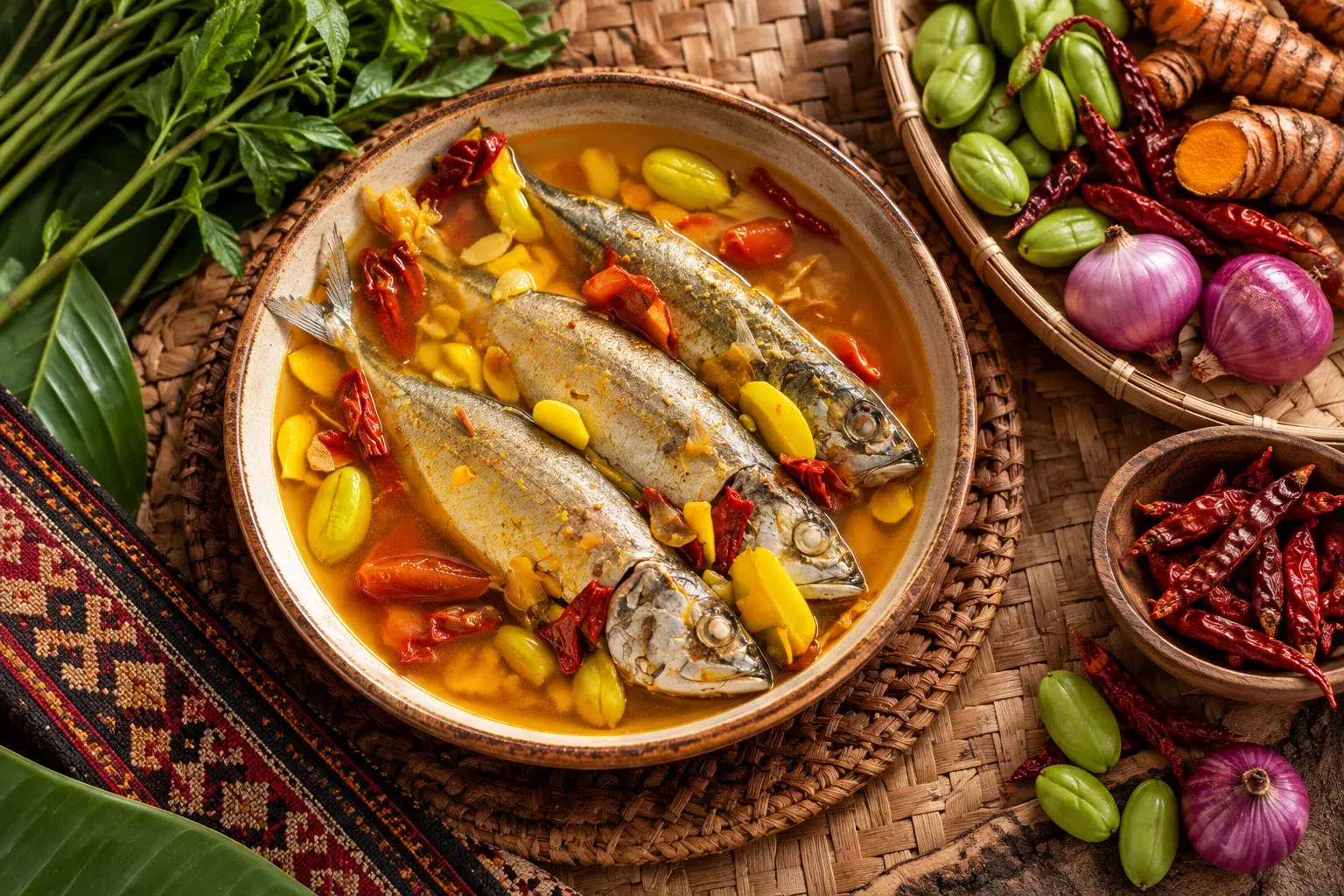
Pinasakan (pinaasakan sada) is a Kadazan-Dusun dish of fish, often mackerel scad, simmered without oil in a sour broth of takob akob fruit, turmeric and salt until the liquid reduces and the fish keeps for days.
- Sour
- Savoury
- Earthy
- Light
Updated
| Origin | West Coast and interior Sabah |
|---|---|
| Community | Kadazan-Dusun |
| Type | main |
| Flavour | Sour, Savoury, Earthy, Light |
| Typical price | RM8–18 per portion |
| Where | Penampang, Kota Kinabalu |
Origin and culture
Pinasakan was designed to last. Cooking fish slowly in a sour, salty liquid preserved it in homes without refrigeration, and families would make a pot to eat over several days.
It is eaten with rice, linopot or nantung (ambuyat, a sago starch), and is often described as a healthy dish because no oil is used.
Ingredients
Fish
Mackerel scad (basung) is common
Takob akob
Dried sour fruit, Garcinia parvifolia
Turmeric
Fresh, for colour and earthiness
Salt
Water
What does Pinasakan taste like?
Gently sour and salty with turmeric's earthiness. The fish is firm and soaked in flavour.
How Pinasakan is made
- 1
Whole or cut fish is layered in a pot with sliced takob akob, crushed turmeric and salt, with a little water.
- 2
It is simmered slowly until the liquid has mostly reduced, giving firm, sour-salty fish that keeps well.
Where to eat Pinasakan
Kadazan-Dusun restaurants and home-style kitchens, especially in Penampang and around Kaamatan.
Restaurants serving Pinasakan
 Restaurant
Penampang · Kampung Pogunon
Borneo Spice
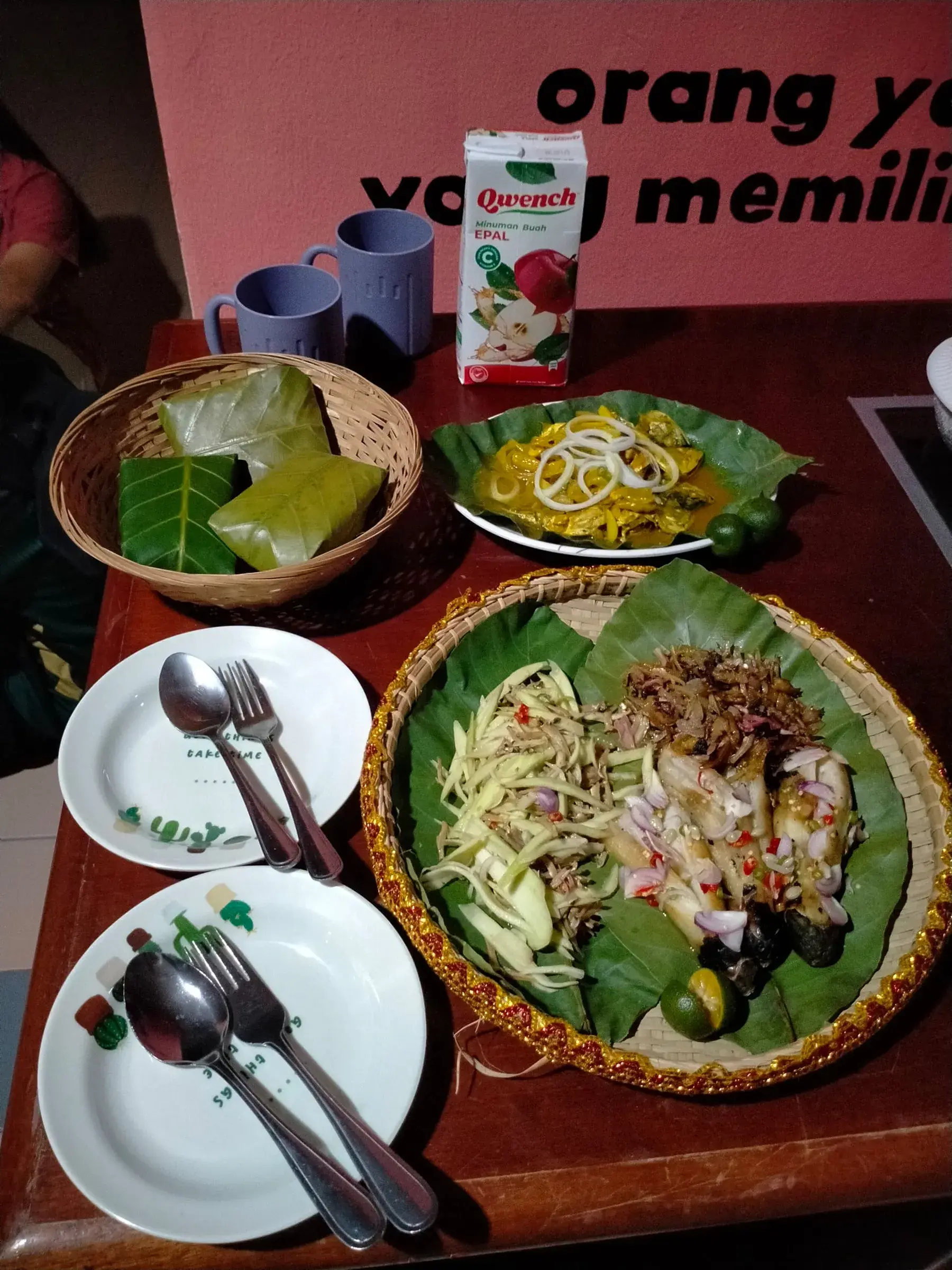
Sources mention: Siga set (ambuyat, pinasakan, hinava and sides), Hinava
Kadazan-DusunSabah LocalNon-halalResearched from 3 sources · not yet visited
Is Pinasakan halal? Dietary notes
Fish, fruit and spices are halal by ingredients. As always, the kitchen's own status determines whether a serving is halal.
| Pork | No pork |
|---|---|
| Seafood | Contains seafood |
| Vegetarian | No |
Pinasakan FAQ
What is takob akob?
Takob akob is the dried fruit of Garcinia parvifolia, a sour forest fruit used in Kadazan-Dusun cooking to give pinasakan its tang.
Why is pinasakan cooked without oil?
The dish is a traditional preserving method: simmering in a salty, sour liquid kept fish edible for days. It needs no oil, which also makes it a light dish.
Sources and further reading
- Pinaasakan sada, Wikipedia. Accessed 6 October 2026
Related dishes
Kadazan-Dusun
Hinava
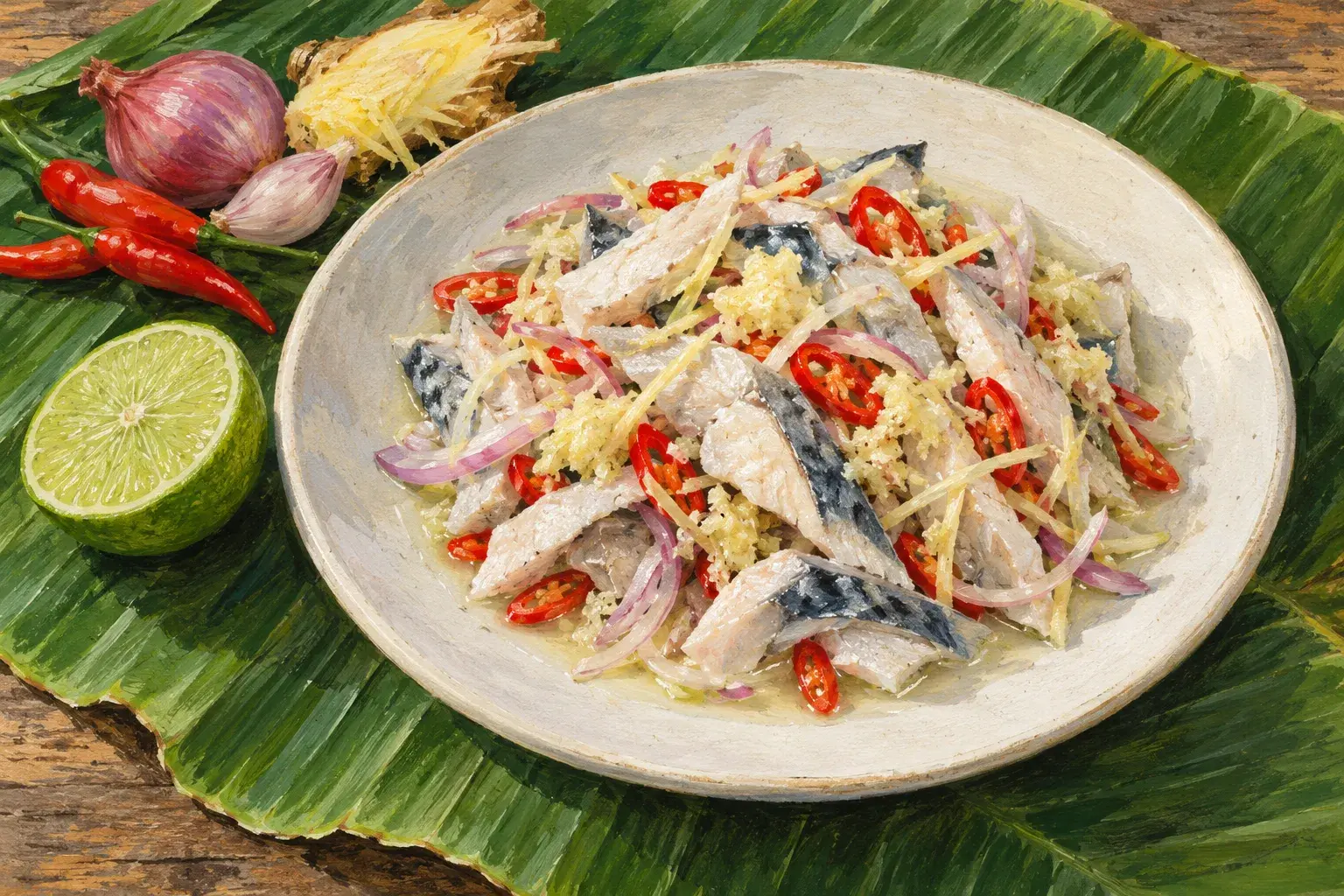
Hinava is a Kadazan-Dusun dish of raw fish cured in lime juice and tossed with chilli, shallot, ginger and grated bambangan seed. It is fresh, sour and sharp, and it's served as a side with rice.
Kadazan-Dusun
Linopot
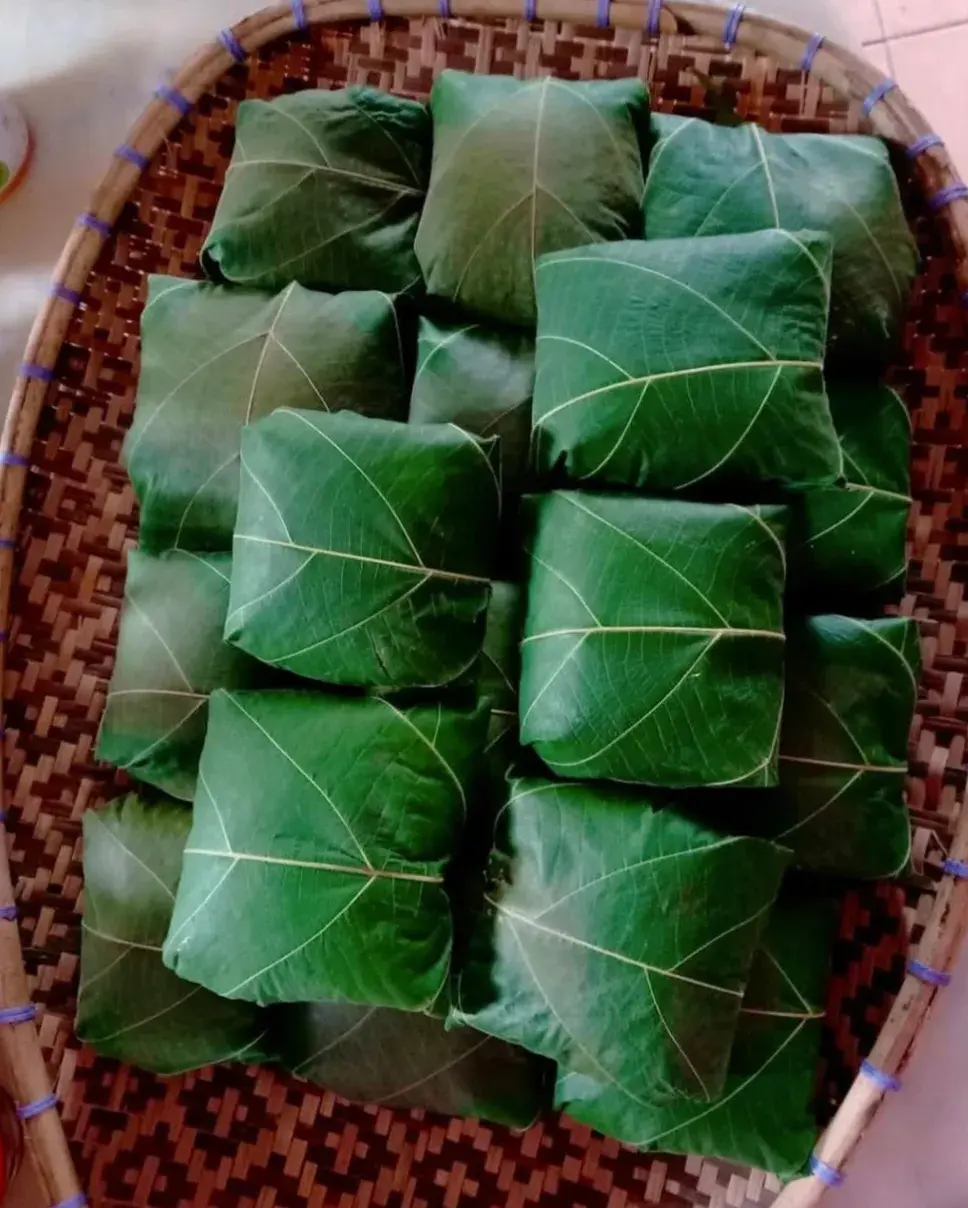
Linopot is rice, usually hill rice or a mix with sticky rice, wrapped in a doringin, tarap or banana leaf into a neat parcel. It is the traditional Kadazan-Dusun, Murut and Rungus way to carry and serve rice with side dishes.
Kadazan-Dusun
Tuhau
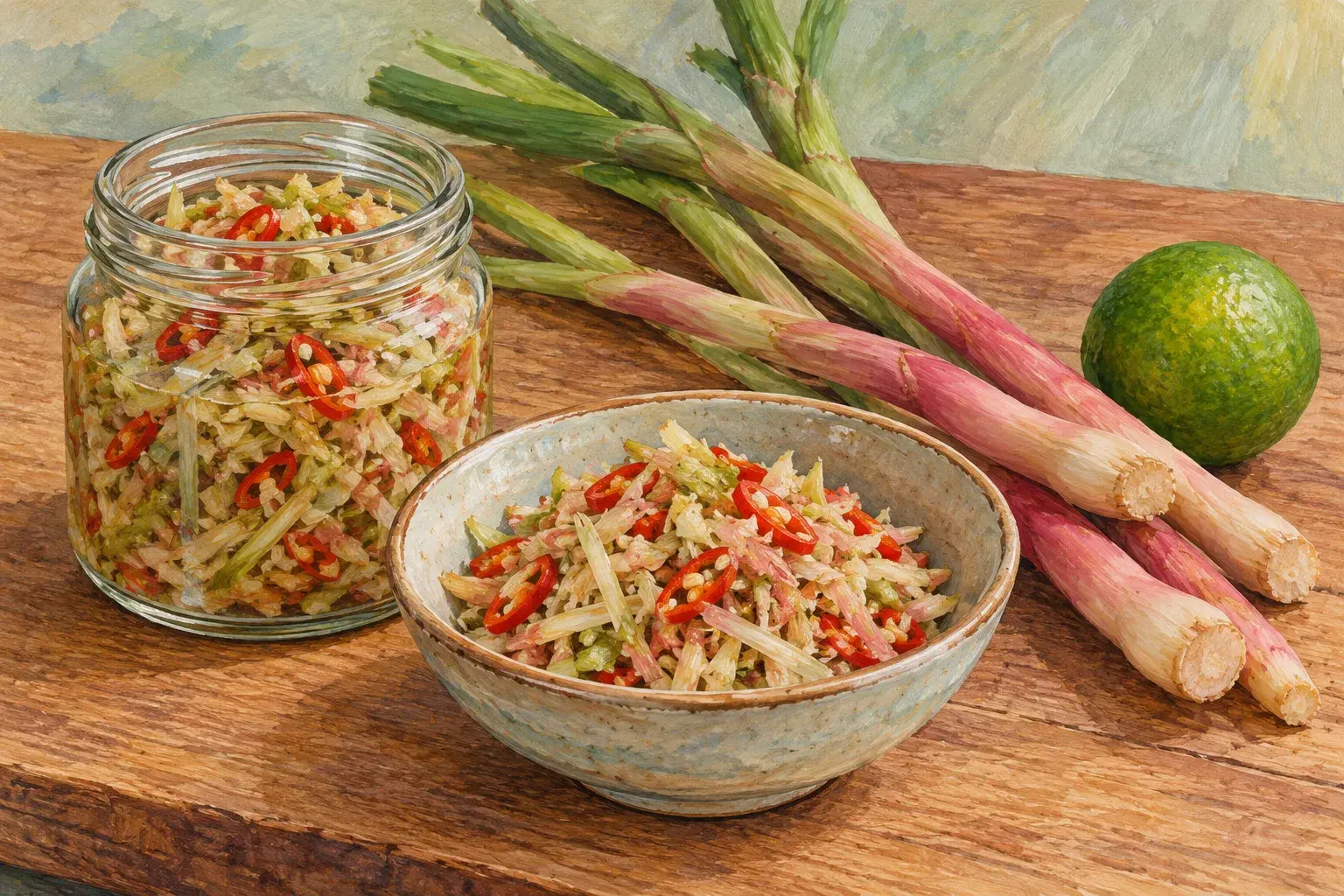
Tuhau is a pungent Kadazan-Dusun and Murut relish made from the stems of a wild ginger (Etlingera coccinea), chopped and mixed with chilli, lime or vinegar and salt. It is eaten in small amounts with rice and fish.
Guides and trips with Pinasakan
Food guide
Best Food in Kota Kinabalu: What to Eat and Where
The dishes worth planning a KK trip around, from ngiu chap breakfasts to Kadazan-Dusun lunches and seafood by the kilo, and how to fit them into a day.
Updated
Food guide
Sabah Traditional Food: 10 Dishes to Know
A field guide to Sabah's traditional dishes, from hinava and pinasakan to tuhau, linopot and latok: what they are, how they taste and where to eat them.
Updated
- 3-day plan
Food & travel
Kota Kinabalu Food Itinerary: 3 Days of Eating
Three days in and around KK: city noodles, a Kadazan-Dusun day in Penampang, and a Tuaran noodle run.