Skip to content
Search
Language
Language: EN

Language

  • English
  • Bahasa MalaysiaComing soon
  • 中文Coming soon

Local food knowledge base

Sabah local food

Sabah's food is shaped by more than 30 indigenous groups and the Chinese, Malay and Bajau communities alongside them. Each page explains one dish: what it is, where it comes from and where to eat it.

New to Sabah food? Start with Sabah Traditional Food: 10 Dishes to Know.

Mains & noodles

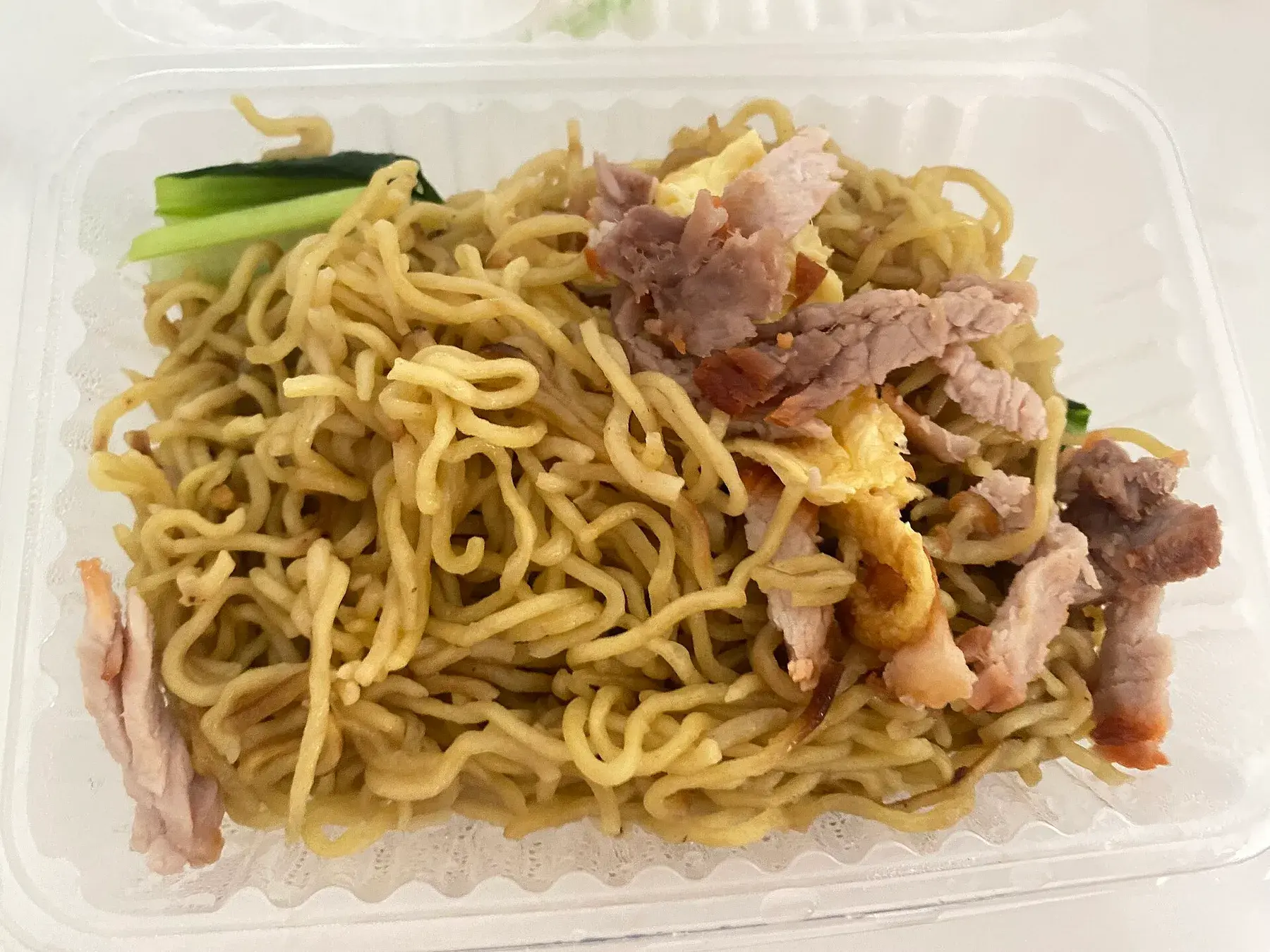
  • Tuaran mee: fried egg noodles with char siu, egg and greens in a takeaway box

    Sabahan Chinese (Hakka)

    Tuaran Mee

    Tuaran mee is a Sabah noodle dish of hand-made egg noodles fried hard in a wok until springy and slightly crisp, served with char siu, choy sum and egg roll. It comes from the town of Tuaran, north of Kota Kinabalu.
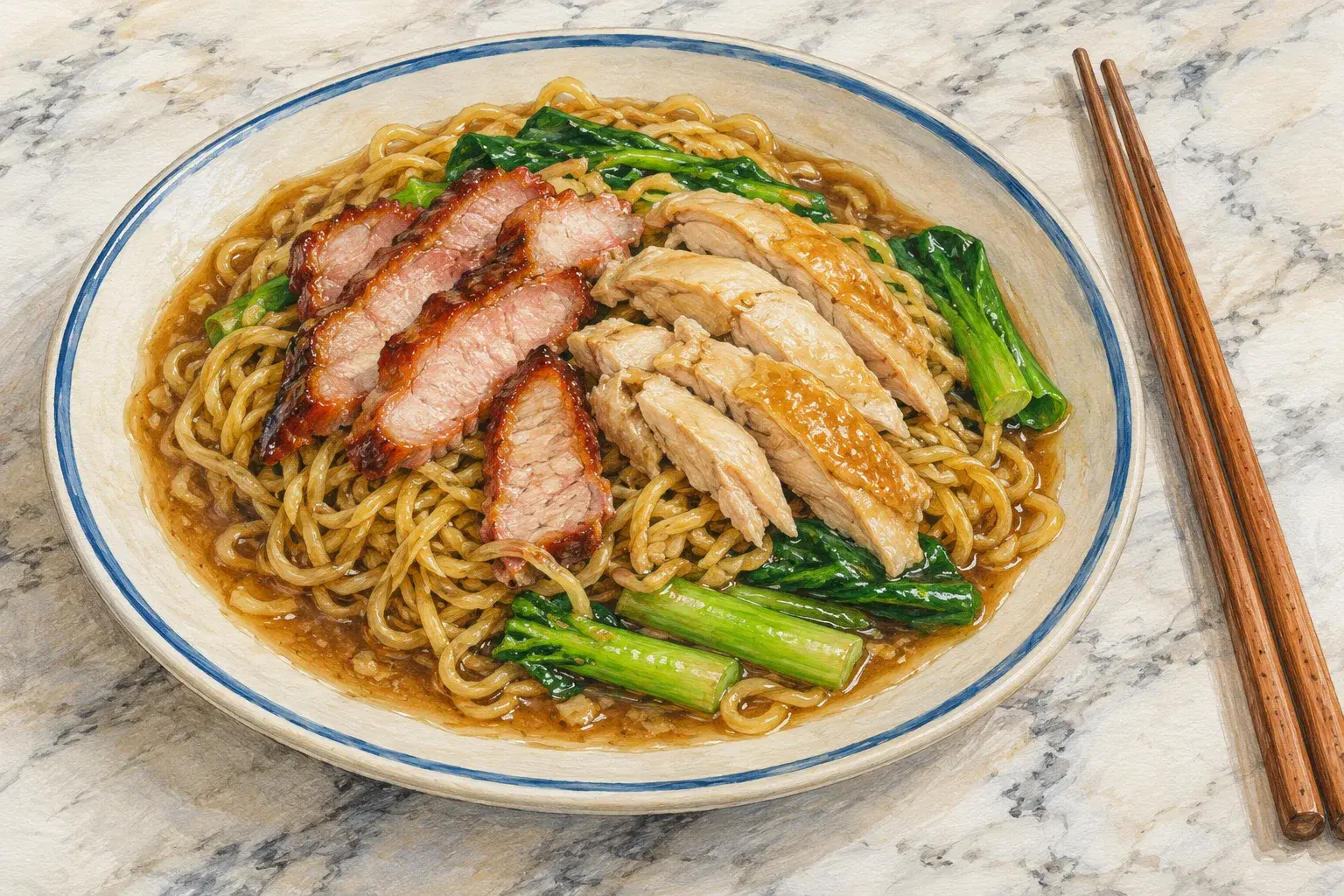
  • Beaufort mee: egg noodles in glossy gravy with char siu, chicken and greens

    Sabahan Chinese

    Beaufort Mee

    Beaufort mee is a 'wet' fried noodle from the town of Beaufort in south-west Sabah: springy egg noodles tossed in a hot wok, then finished in a garlicky gravy with char siu or chicken and crunchy greens.

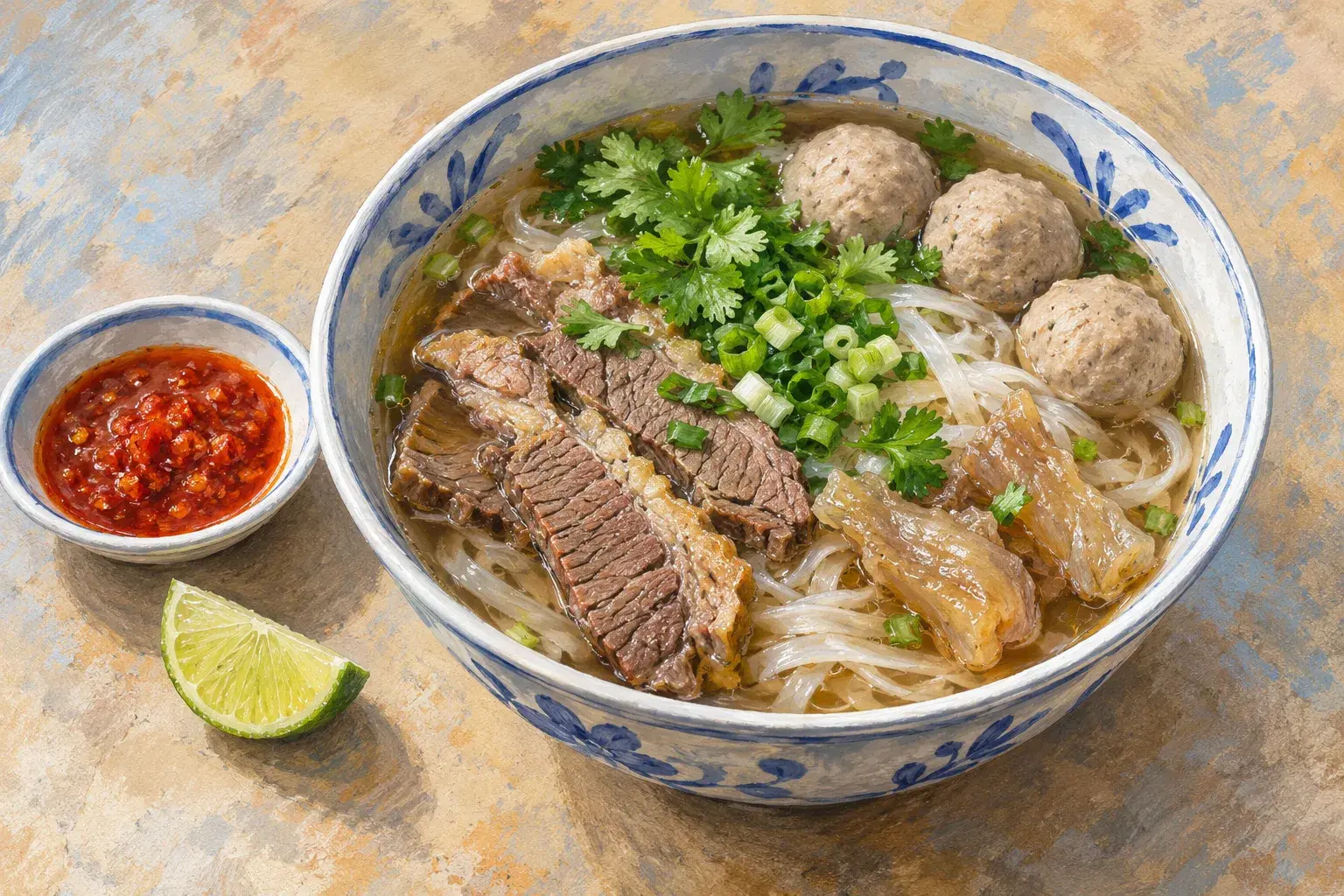
  • Ngiu chap: a bowl of beef noodle soup with sliced beef, tendon and beef balls

    Sabahan Chinese (Hakka)

    Ngiu Chap

    Ngiu chap ('mixed beef' in Hakka) is a Kota Kinabalu beef noodle soup with brisket, tendon, tripe and beef balls in a spiced broth, served with noodles either in the soup or dry on the side.

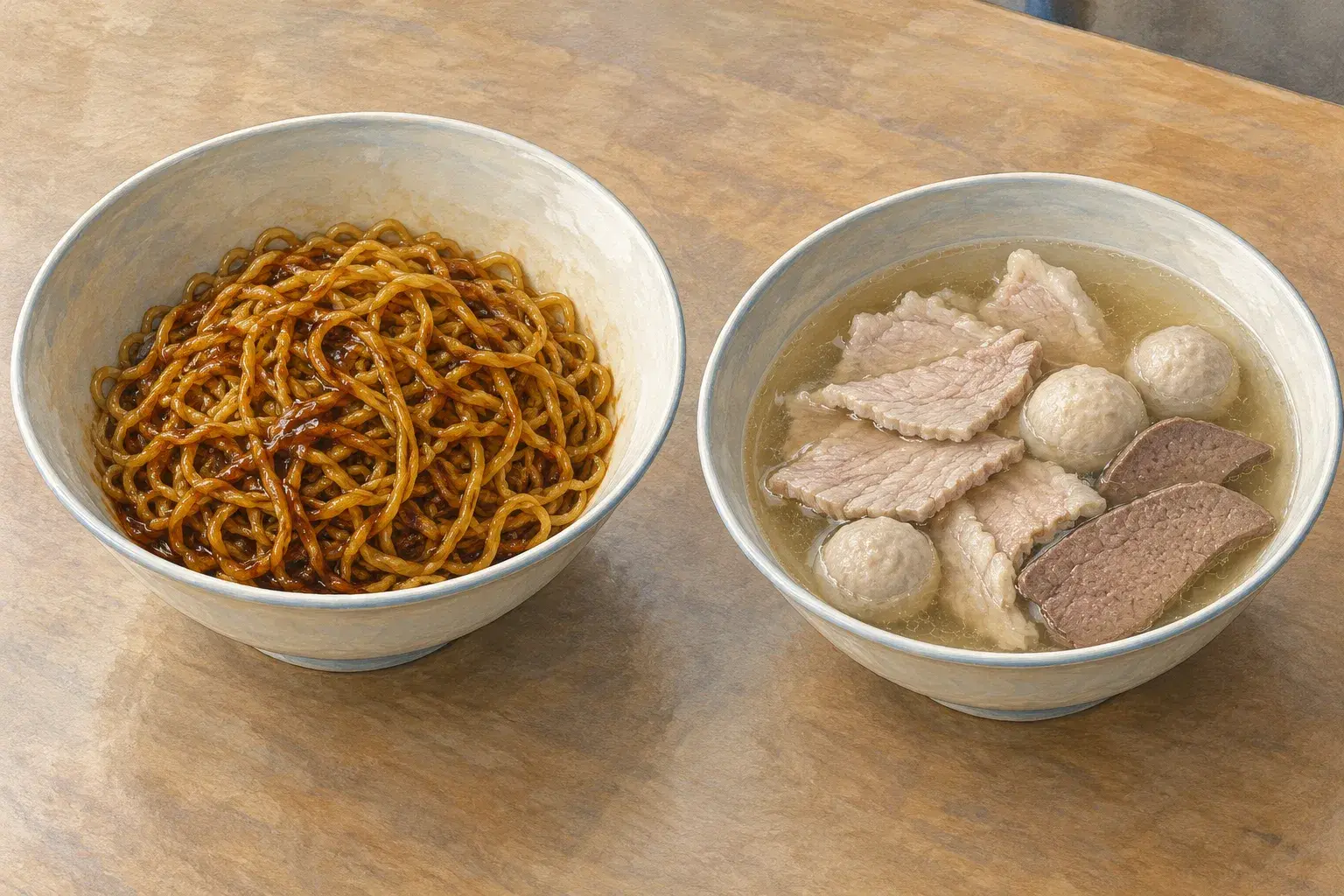
  • Sang nyuk mee in two bowls: yellow noodles glossy with dark soy sauce beside a pale pork broth with sliced pork, meatballs and liver

    Sabahan Chinese

    Sang Nyuk Mee

    Sang nyuk mee is a Sabah pork noodle dish: noodles with marinated sliced pork and a pork-bone broth, served either as a soup or dry with dark soy and the broth on the side. It was first made in Tawau.

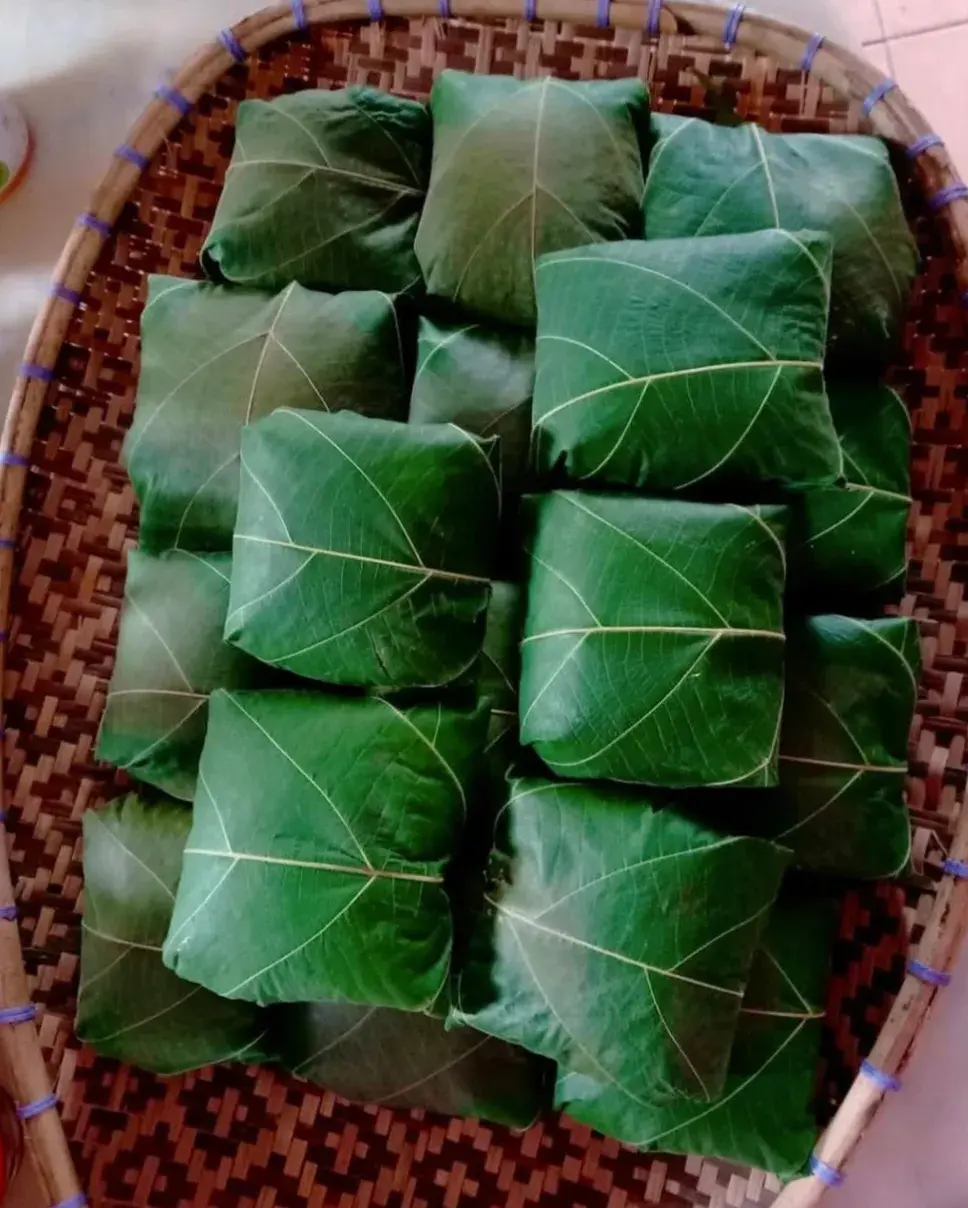
  • Linopot: rice parcels wrapped in leaves, stacked in a basket

    Kadazan-Dusun

    Linopot

    Linopot is rice, usually hill rice or a mix with sticky rice, wrapped in a doringin, tarap or banana leaf into a neat parcel. It is the traditional Kadazan-Dusun, Murut and Rungus way to carry and serve rice with side dishes.

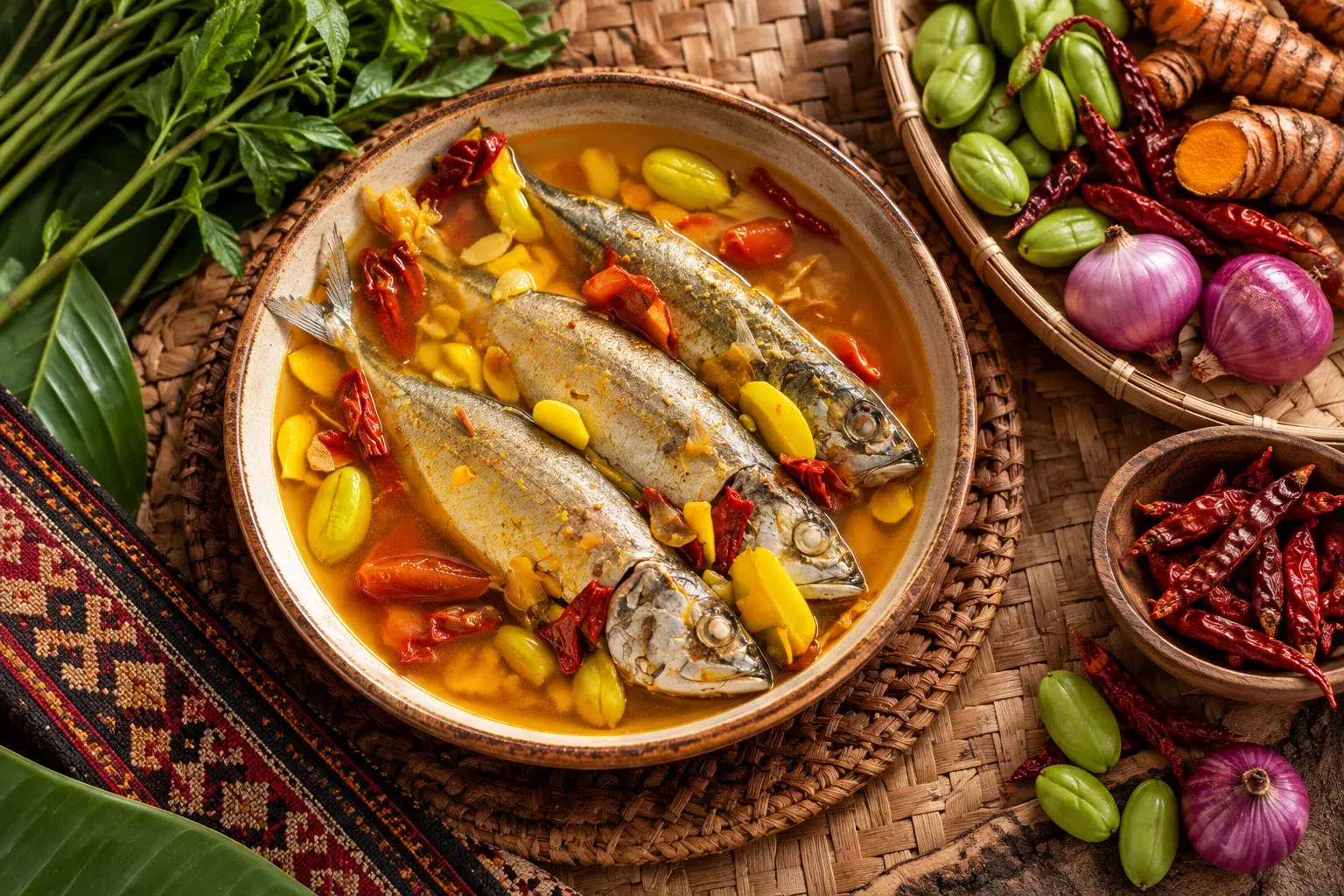
  • Pinasakan: whole mackerel in a yellow turmeric broth with chillies, served in a bowl on a woven mat beside fresh turmeric, shallots and dried chillies

    Kadazan-Dusun

    Pinasakan

    Pinasakan (pinaasakan sada) is a Kadazan-Dusun dish of fish, often mackerel scad, simmered without oil in a sour broth of takob akob fruit, turmeric and salt until the liquid reduces and the fish keeps for days.

Sides, relishes & ingredients

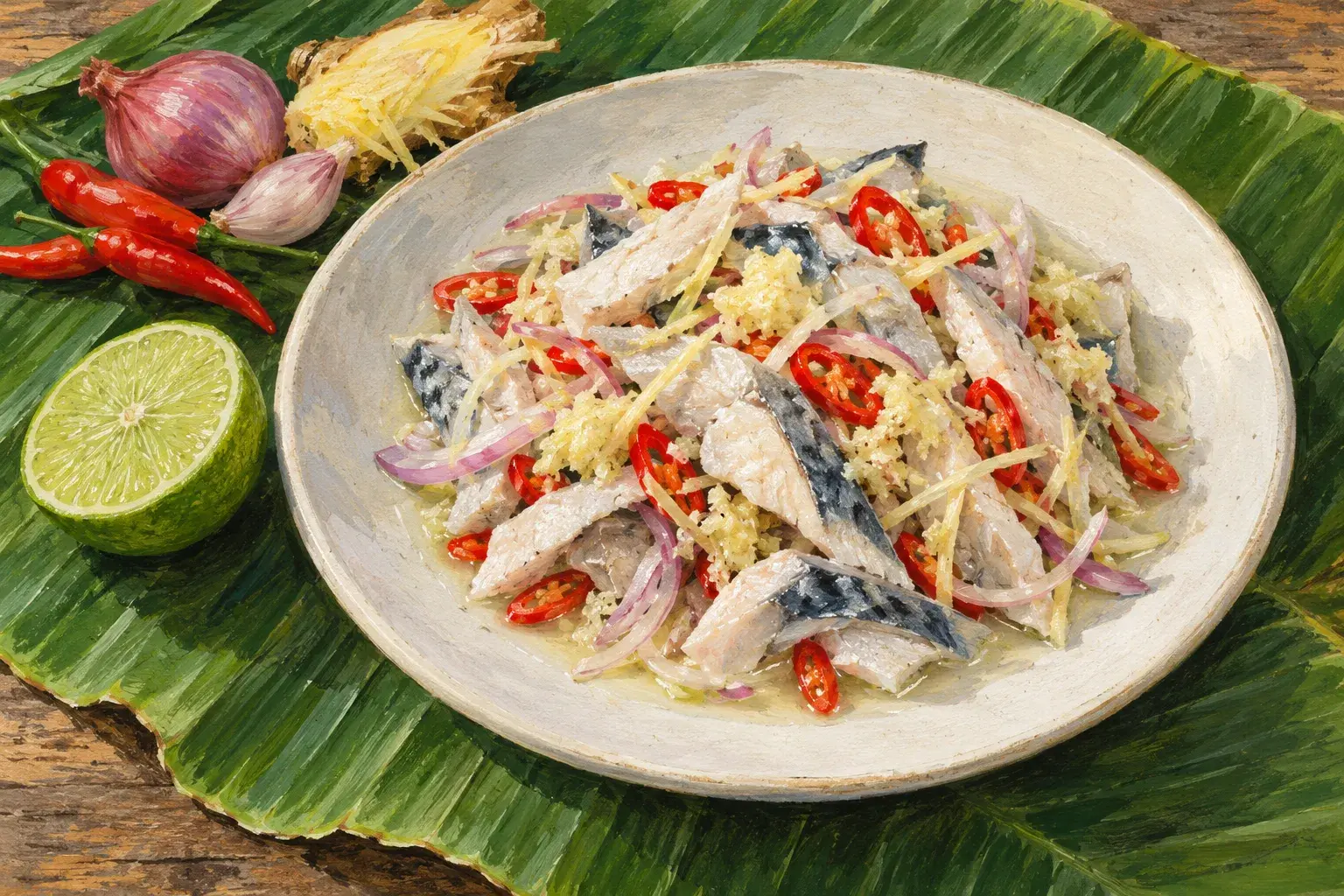
  • Hinava: strips of lime-cured mackerel with red chilli, shallot and young ginger on a banana leaf

    Kadazan-Dusun

    Hinava

    Hinava is a Kadazan-Dusun dish of raw fish cured in lime juice and tossed with chilli, shallot, ginger and grated bambangan seed. It is fresh, sour and sharp, and it's served as a side with rice.

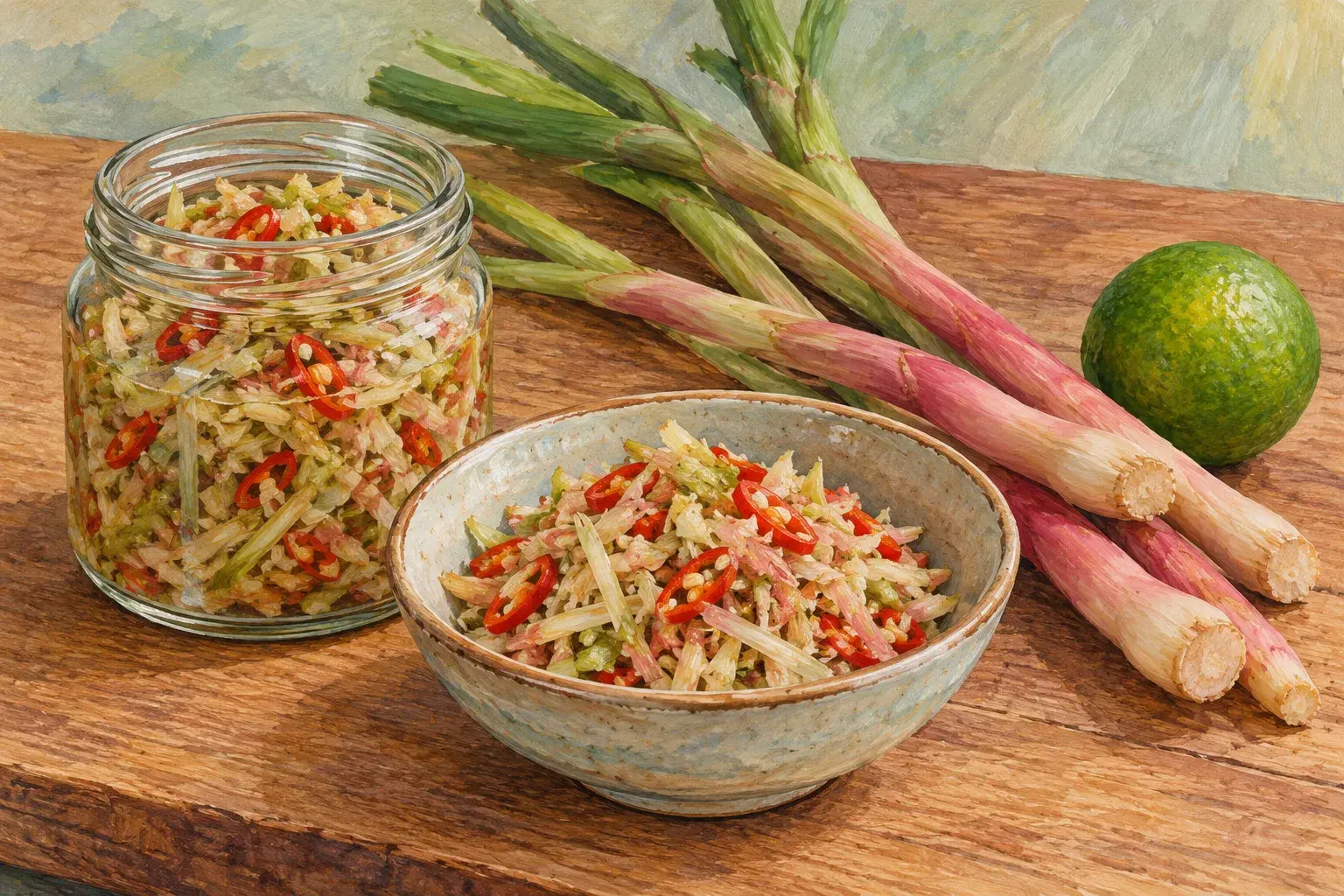
  • Tuhau: chopped wild ginger relish with red chilli in a jar and a small bowl

    Kadazan-Dusun

    Tuhau

    Tuhau is a pungent Kadazan-Dusun and Murut relish made from the stems of a wild ginger (Etlingera coccinea), chopped and mixed with chilli, lime or vinegar and salt. It is eaten in small amounts with rice and fish.

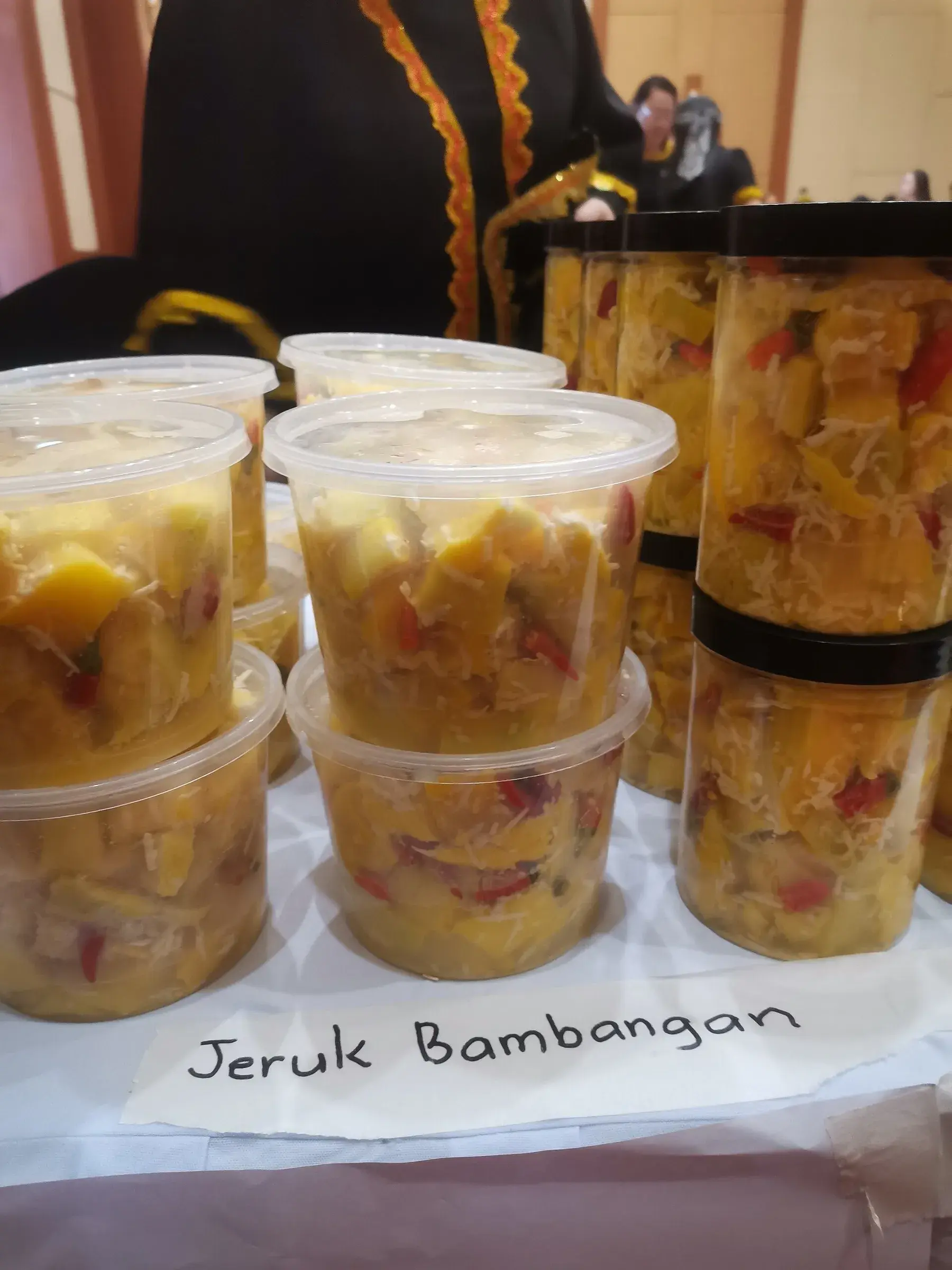
  • Tubs of jeruk bambangan, pickled wild mango, for sale

    Kadazan-Dusun

    Bambangan

    Bambangan is a large wild mango (Mangifera pajang) native to Borneo, with rough brown skin and bright yellow-orange flesh. In Sabah it is best known pickled with salt and its own grated seed, as a sour relish for rice.

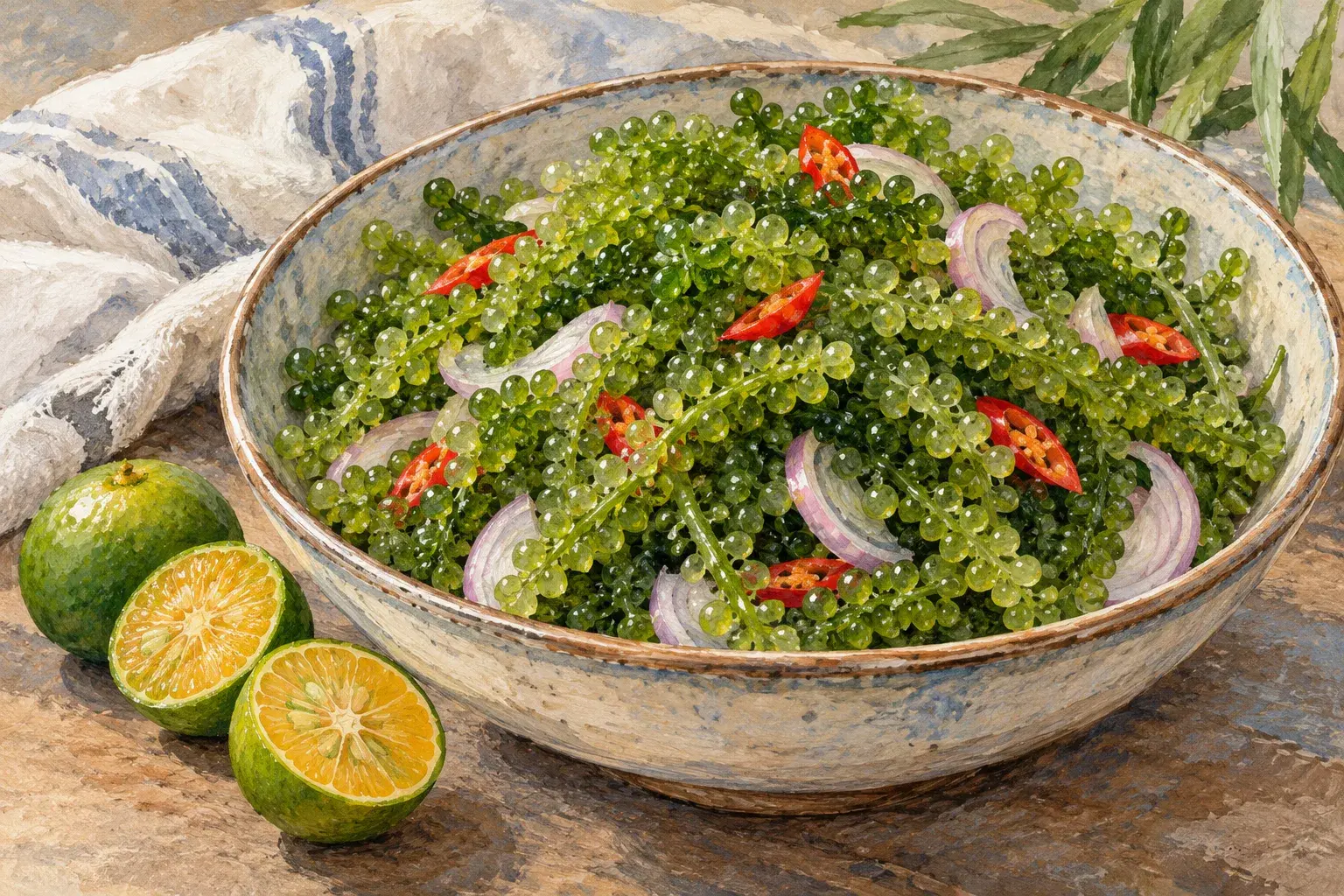
  • Latok sea grapes dressed with lime, chilli and shallot

    Bajau

    Latok

    Latok is an edible seaweed (Caulerpa lentillifera) made of tiny green bead-like bubbles that pop in the mouth. On Sabah's coasts it is eaten raw with lime, chilli and shallot as a salad.

Sweets & snacks

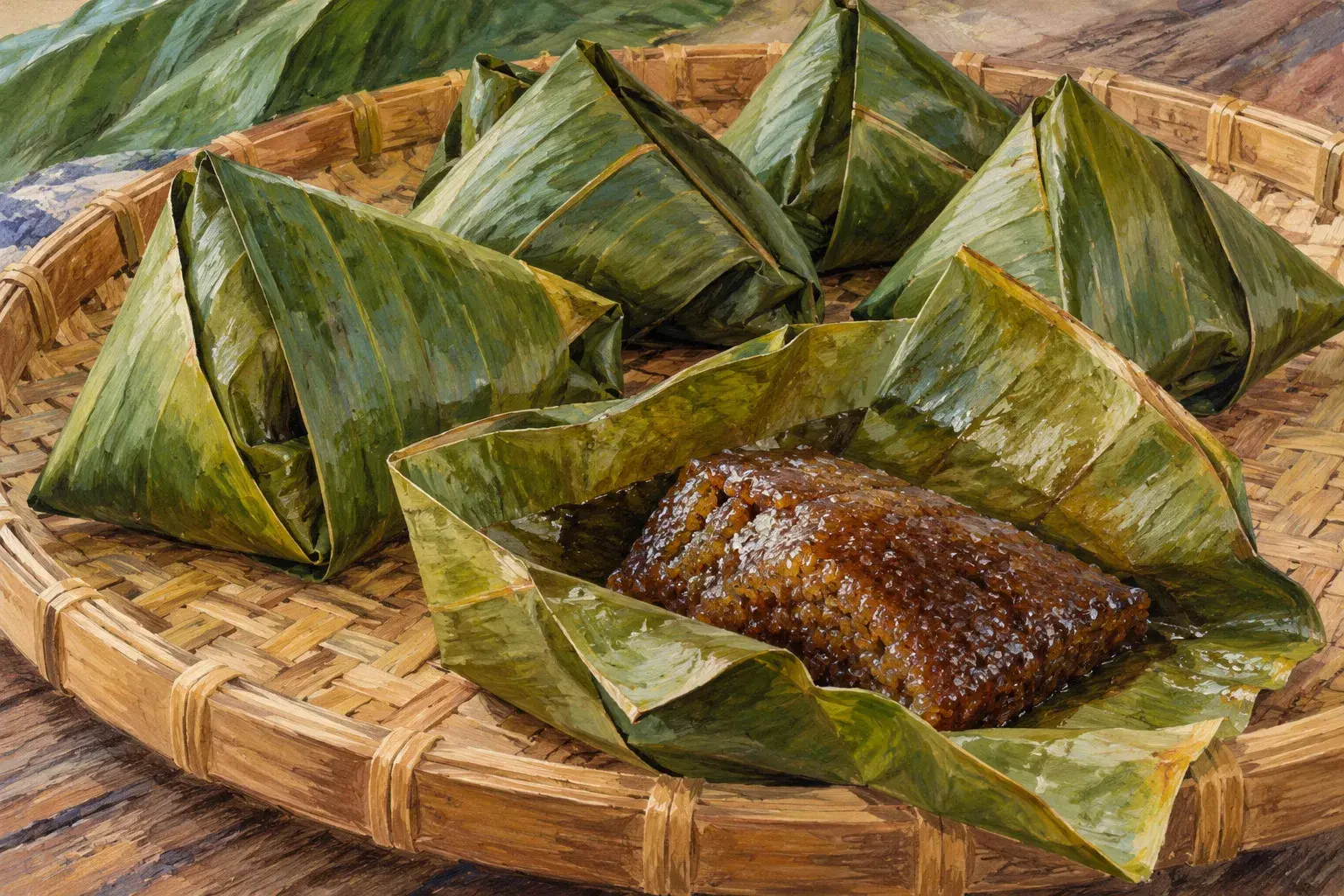
  • Hinompuka: banana-leaf parcels, one opened to show the brown rice cake

    Kadazan-Dusun

    Hinompuka

    Hinompuka is a Kadazan-Dusun steamed rice cake made from glutinous rice flour and palm or brown sugar, wrapped in banana leaf. It is sweet, chewy and fragrant, and especially associated with the Kadazan of Penampang.